Ayurvedic Daily Routine: Dinacharya Certification Course, Section 8, Lecture 58
Introduction
Imagine starting your day with a warm, soothing massage that not only relaxes your body but also revitalizes your mind. This ancient Ayurvedic practice is called Abhyanga, a self-massage technique that nourishes the body, calms the nervous system, and promotes overall well-being.
In this blog, we will explore what Abhyanga is, its benefits, how to perform it, and the best oils to use based on your body type (Dosha). Whether you’re a beginner or someone looking to refine your practice, this guide will help you make Abhyanga an essential part of your daily routine.
What is Abhyanga?
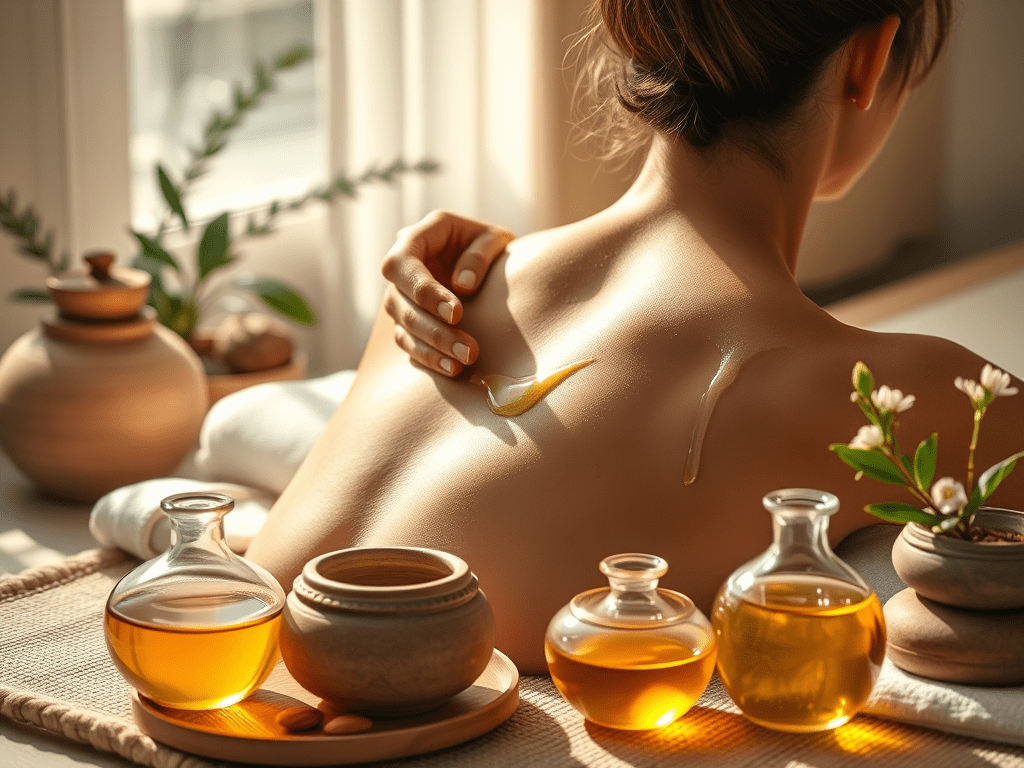
Abhyanga is an Ayurvedic self-massage practice that involves applying warm oil all over the body. It is believed to balance the three Doshas—Vata, Pitta, and Kapha, which represent different energies within the body. Regular practice helps in detoxification, improves circulation, and enhances overall health.
Ayurvedic texts describe Abhyanga as a daily practice for maintaining youthfulness and vitality. It is also a form of self-care that allows you to reconnect with your body and mind.
Benefits of Abhyanga
1. Nourishes and Hydrates the Skin
Massaging with warm oil deeply moisturizes the skin, preventing dryness and flakiness. It also helps maintain a youthful glow and elasticity.
2. Calms the Nervous System
The rhythmic motion of massage helps activate the parasympathetic nervous system, reducing stress and promoting relaxation. It is particularly effective for those dealing with anxiety and restlessness.
3. Boosts Circulation and Lymphatic Drainage
Abhyanga stimulates blood circulation, allowing oxygen and nutrients to reach tissues more efficiently. It also helps flush out toxins through the lymphatic system.
4. Promotes Better Sleep
If you struggle with insomnia, an evening Abhyanga session can be a game-changer. The warmth of the oil and gentle strokes relax the mind and body, making it easier to fall asleep.
5. Enhances Joint and Muscle Health
Regular self-massage lubricates joints, reduces stiffness, and helps relieve muscle pain. It is highly beneficial for people suffering from arthritis or chronic pain.
6. Balances the Doshas
Each Dosha benefits from different oils and massage techniques. Performing Abhyanga according to your Dosha type enhances its effectiveness.
Choosing the Right Oil Based on Your Dosha
Vata Dosha (Air & Space Element)
Vata types tend to have dry skin, cold hands and feet, and an anxious mind. They benefit from warm, grounding oils such as:
- Sesame Oil (best for deep nourishment)
- Almond Oil (for hydration and warmth)
- Ashwagandha Oil (for calming nerves)
Pitta Dosha (Fire & Water Element)
Pitta individuals have sensitive skin, often prone to inflammation or heat-related issues. They should use cooling oils like:
- Coconut Oil (soothing and cooling)
- Sunflower Oil (light and non-greasy)
- Brahmi Oil (calms the mind and reduces stress)
Kapha Dosha (Earth & Water Element)
Kapha types tend to have oily skin and sluggish circulation. They need stimulating and light oils such as:
- Mustard Oil (invigorates and boosts circulation)
- Sesame Oil (for detoxification)
- Eucalyptus or Ginger-infused Oil (helps break stagnation)
How to Perform Abhyanga
Step 1: Choose a Comfortable Space
Find a warm, quiet place where you won’t be disturbed. You can do this in the bathroom or bedroom, preferably before showering.
Step 2: Warm the Oil
Gently warm the oil by placing the bottle in a bowl of hot water. The warmth allows for better absorption and a soothing experience.
Step 3: Start with the Scalp
Apply a small amount of oil to your scalp and massage using circular motions. This nourishes the hair and calms the nervous system.
Step 4: Massage the Face and Neck
Use gentle upward strokes on the face and downward strokes on the neck. Avoid too much oil on the face if you have acne-prone skin.
Step 5: Work Down to the Arms and Hands
Use long strokes on the arms and circular motions on the joints. Pay extra attention to the elbows and wrists.
Step 6: Massage the Abdomen and Chest
Use clockwise circular motions on the abdomen to aid digestion. Apply gentle strokes on the chest, moving outward toward the shoulders.
Step 7: Massage the Legs and Feet
Use long strokes on the legs and circular motions on the knees and ankles. Spend extra time on the feet, as they contain important energy points.
Step 8: Let the Oil Sit
Allow the oil to absorb for at least 10-20 minutes before taking a warm shower. This ensures deeper penetration and maximum benefits.
When to Perform Abhyanga
- Morning: Energizes and prepares you for the day.
- Evening: Helps relax and promotes better sleep.
- Before Yoga or Meditation: Enhances focus and flexibility.
- Before Bathing: Protects the skin and locks in moisture.
Precautions to Keep in Mind
- Avoid if you have fever, cold, or indigestion.
- Do not perform Abhyanga on open wounds or skin infections.
- Use lighter oils if you have oily or acne-prone skin.
- Be cautious if you are pregnant—consult an Ayurvedic expert before practice.
Final Thoughts
Abhyanga is more than just a massage; it’s a form of self-care that rejuvenates the body and mind. Whether you choose to practice it daily or a few times a week, this Ayurvedic ritual will leave you feeling refreshed, balanced, and more connected to yourself.
So why not give it a try? Your body and mind will thank you!
 Ritucharya
Leave a comment