Tag: Holistic Health
-

The Three Pillars of Life: A Guide to Ayurvedic Food Practices
Ayurveda emphasizes the importance of Ahar (food) as a cornerstone of health, advocating for seasonal eating and mindful practices. Proper food choices align with body doshas, aiding digestion and promoting well-being. Key guidelines include regular meal times, avoiding overeating, and prioritizing fresh, local foods to enhance energy and longevity.
-

Understanding Ayurvedic Prakriti: Your Body Type Explained
Understanding Ayurvedic Prakriti: Your Body Type Explained Ayurveda, the ancient Indian system of medicine, classifies individuals based on their unique body constitution or *Prakriti*. This inherent nature is determined by the balance of the three doshas—Vata, Pitta, and Kapha—which influence physical traits, mental tendencies, and overall health. Understanding your *Prakriti* can help you make informed…
-

When Should You Avoid Ayurvedic Body Massage?
The blog post discusses Ayurvedic massage’s benefits and recommends avoiding it under specific conditions: Kapha-related disorders, post-Panchakarma recovery, after physical exhaustion, during severe indigestion, and when ill with fever. It emphasizes listening to one’s body and consulting an Ayurvedic practitioner for personalized guidance regarding massages.
-

Ayurvedic Massage for Kapha Dosha: Energize and Balance Your Body
The content discusses the Ayurvedic approach to balancing Kapha Dosha through massage techniques. Individuals with a dominant Kapha constitution are characterized by sluggishness and slow metabolism. Strong, invigorating massages, especially around the abdomen and lower body, along with stimulating oils and steam therapy, are recommended to enhance circulation, digestion, and energy.
-

The Ultimate Guide to Ayurvedic Self-Massage (Abhyanga)
Ayurvedic self-massage, or Abhyanga, is a vital self-care practice promoting overall well-being through relaxation, enhanced circulation, and balanced energy. Recommended for mornings, it focuses on key areas: head, ears, and feet. Daily practice using suitable oils can transform health and rejuvenate body and mind in just 5-10 minutes.
-
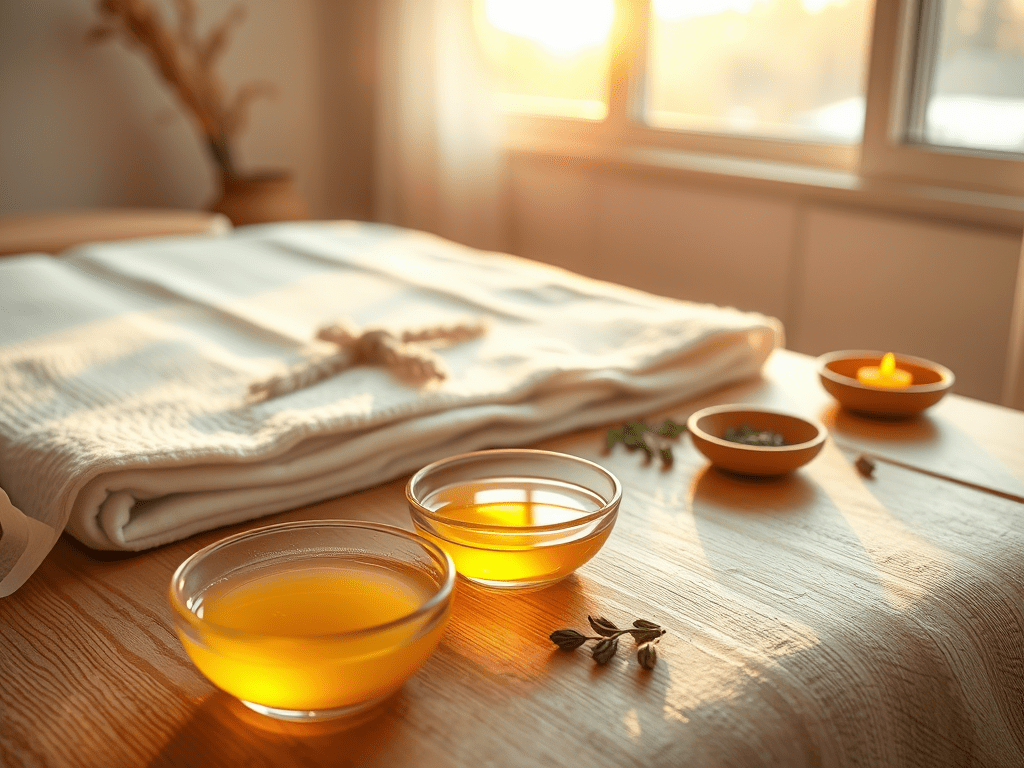
The Best Time for Abhyanga: Ayurvedic Body Massage
Abhyanga, an Ayurvedic self-care ritual involving body massage, is most beneficial when practiced in the morning during Kapha time. It enhances circulation, detoxifies the skin, and primes the body for the day. Proper technique involves elimination beforehand, using appropriate oils, and allowing oil absorption, followed by a warm bath for optimal benefits.
-

The Best Ayurvedic Oils for Your Body Massage
The Ayurvedic Daily Routine emphasizes self-care through massage, recommending specific oils for each body type or Dosha: Vata (Almond Oil), Pitta (Coconut Oil), and Kapha (Castor or Mustard Oil). Understanding your Dosha helps in selecting the right oil, promoting relaxation, detoxification, and nourishment tailored to individual needs.
-

The Power of Ayurvedic Body Massage: A Complete Guide
Ayurvedic body massage, or Abhyanga, is a vital self-care ritual that promotes holistic well-being by balancing body energies through the use of herbal oils. It nurtures the skin, boosts circulation, enhances digestion, supports mental health, and strengthens the immune system. Daily practice, especially of specific body areas, yields significant benefits.
-

The Magic of Ayurvedic Body Massage: A Daily Ritual for Health and Wellness
Ayurvedic body massage, or Abhyanga, offers numerous health benefits, including improved circulation, reduced stress, better digestion, and enhanced skin health. This rhythmic oil massage nourishes the body and balances the doshas. Incorporating Abhyanga into your daily routine promotes relaxation, rejuvenates energy, and supports overall well-being. It’s a holistic approach to health.
-

The Best Time to Practice Kavala and Gandusha: An Ayurvedic Guide
Ayurvedic practices Kavala and Gandusha enhance oral hygiene and overall health. Kavala should be performed after brushing, meals, and before bed, while Gandusha is best after body massages, in calm conditions, or during mild sunlight. Both methods promote detoxification, strengthen oral tissues, and offer natural health benefits when practiced at optimal times.
 Ritucharya