Tag: natural healing
-

Exploring Dosha Prakriti: Understanding Your Ayurvedic Body Type
Ayurveda classifies individuals based on their **Prakriti**, or natural constitution, which is primarily influenced by the three doshas—**Vata, Pitta, and Kapha**. Understanding your **Dosha Prakriti** helps in making informed lifestyle and dietary choices to maintain balance and prevent health issues. This blog explores the **seven types of Dosha Prakriti**, their characteristics, common health concerns, and…
-

Understanding Ayurvedic Body Types: Vata, Pitta, and Kapha
Ayurveda categorizes human bodies into three doshas—**Vata, Pitta, and Kapha**—each with unique physical, metabolic, and mental traits. Understanding your dosha helps in maintaining balance, preventing diseases, and adopting a personalized lifestyle for optimal well-being. This guide explores the characteristics, common health issues, and dietary & lifestyle recommendations for each body type. Learn how to balance…
-

The Importance of Kaal (Time) in Ayurveda: When to Eat for Optimal Health
The Ayurvedic concept of Kaal emphasizes the importance of timing in food consumption for optimal digestion and health. Key guidelines include having the largest meal at noon when digestive fire is strongest, consuming lighter meals in the morning and evening, and adjusting food intake based on seasonal changes to maintain balance.
-

The Ayurvedic Approach to Bathing After Massage and Exercise
Ayurveda emphasizes the timing and temperature of bathing post-massage and exercise to avoid health issues. Individuals should wait 15-30 minutes before bathing and adjust water temperature according to their Dosha. Vata and Kapha types need warm water, while Pitta types can benefit from cooler baths, especially in summer.
-

Understanding Ayurvedic Prakriti: Your Body Type Explained
Understanding Ayurvedic Prakriti: Your Body Type Explained Ayurveda, the ancient Indian system of medicine, classifies individuals based on their unique body constitution or *Prakriti*. This inherent nature is determined by the balance of the three doshas—Vata, Pitta, and Kapha—which influence physical traits, mental tendencies, and overall health. Understanding your *Prakriti* can help you make informed…
-

The Role of Ayurvedic Body Massage in Health and Sickness
Ayurvedic massage, or Abhyanga, is a traditional practice beneficial for relaxation and healing, balancing the doshas. It should be avoided during fever, digestive issues, chronic pain, autoimmune conditions, or allergies. However, it’s effective for joint pain, stress, aging, poor circulation, and weight management. Always consult a professional for guidance.
-

The Ultimate Guide to Ayurvedic Self-Massage (Abhyanga)
Ayurvedic self-massage, or Abhyanga, is a vital self-care practice promoting overall well-being through relaxation, enhanced circulation, and balanced energy. Recommended for mornings, it focuses on key areas: head, ears, and feet. Daily practice using suitable oils can transform health and rejuvenate body and mind in just 5-10 minutes.
-

The Best Time for Abhyanga: Ayurvedic Self-Massage Guide
Abhyanga, an Ayurvedic self-massage, is best practiced in the morning before bathing, as it enhances circulation and detoxifies the body. Avoid massaging after meals to prevent digestive disruption. Evening sessions are also beneficial for relaxation and pain relief. Regular practice promotes overall well-being and balances doshas effectively.
-
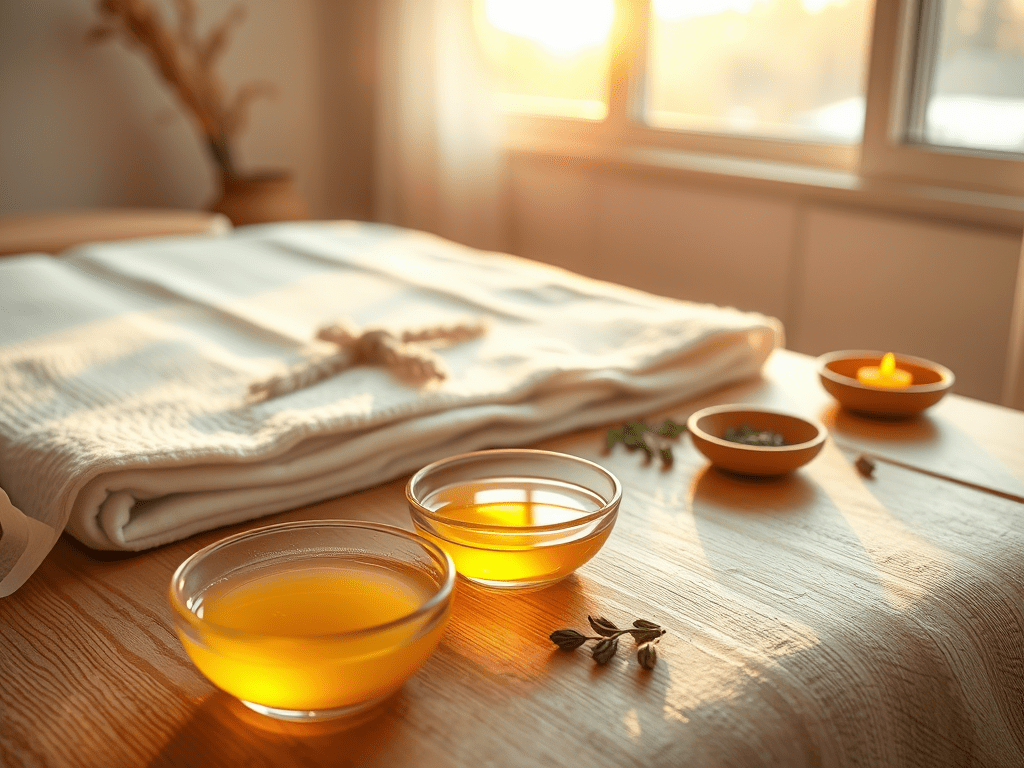
The Best Time for Abhyanga: Ayurvedic Body Massage
Abhyanga, an Ayurvedic self-care ritual involving body massage, is most beneficial when practiced in the morning during Kapha time. It enhances circulation, detoxifies the skin, and primes the body for the day. Proper technique involves elimination beforehand, using appropriate oils, and allowing oil absorption, followed by a warm bath for optimal benefits.
-

The Best Ayurvedic Oils for Your Body Massage
The Ayurvedic Daily Routine emphasizes self-care through massage, recommending specific oils for each body type or Dosha: Vata (Almond Oil), Pitta (Coconut Oil), and Kapha (Castor or Mustard Oil). Understanding your Dosha helps in selecting the right oil, promoting relaxation, detoxification, and nourishment tailored to individual needs.
 Ritucharya