Tag: Natural Remedies
-

When to Avoid Applying Anjan: An Ayurvedic Perspective
Anjan, an Ayurvedic eye kohl, enhances vision but may cause discomfort under certain conditions. Ayurveda advises against its use when experiencing imbalances such as autoimmune disorders, poor digestion, fever, emotional distress, excessive exertion, or after alcohol consumption. Following Ayurvedic guidelines is crucial to prevent eye irritation and maintain health.
-

When Should You Avoid Applying Anjan? A Complete Ayurvedic Guide
Anjan, an Ayurvedic eye-care remedy, offers cooling benefits but can cause harm when misused. Avoid applying it after exercise, during severe bloating, after crying, or when feeling stressed. Conditions like fever, migraines, and exposure to pollutants also warrant caution. Prioritize balance and listen to your body to prevent discomfort.
-

The Art of Applying Anjan: Ayurvedic Wisdom for Healthy Eyes
The Ayurvedic practice of Anjan, or Collyrium, is essential for eye health, involving specific applicators like Chalaka made from various materials. Applying Anjan effectively enhances vision and balances eye heat, especially at night. Proper technique and timing are crucial for maximizing benefits and ensuring eye safety in this traditional routine.
-

The Best Age to Start Practicing Kawal and Gandush
Ayurvedic oil-pulling methods, Kawal and Gandush, enhance oral hygiene and overall health. Not suitable for children under four, these techniques can be introduced with supervision from that age onwards. They detoxify, balance doshas, improve digestion, and strengthen facial health, making them beneficial for all ages. Start practicing today!
-

The Ancient Practice of Gandush: A Powerful Oil Pulling Technique
Gandush, a significant Ayurvedic oil-pulling technique, involves holding a medicated liquid in the mouth without movement, offering multiple health benefits. It detoxifies the mouth, strengthens gums and teeth, enhances facial muscle tone, improves digestion, and supports sinus health. Regular practice fosters overall well-being, making it essential for anyone seeking holistic health.
-
The Power of Kawal: A Simple and Effective Oil Pulling Technique
Kawal is an ancient Ayurvedic oil-pulling technique involving swishing a small amount of medicated liquid in the mouth to enhance oral hygiene and overall health. This practice offers benefits like deep cleansing, improved gum health, detoxification, and facial muscle engagement. Daily practice can boost wellness, requiring only a few minutes.
-

The Power of Vedic Oil Pulling: A Timeless Ayurvedic Practice
Oil pulling, an ancient Ayurvedic practice, enhances oral hygiene and overall well-being. By swishing oil in the mouth, it removes toxins, improves dental health, and benefits the head region. With types like Kavala and Gandusha, and using oils like sesame or coconut, regular practice promotes stronger teeth, improved digestion, and mental clarity.
-

The Ultimate Ayurvedic Herbal Dental Powder for a Healthy Smile
The Ayurvedic herbal dental powder offers a natural alternative to conventional toothpaste, combining herbs, spices, and minerals for enhanced oral health. Key ingredients include Trikatu, Triphala, and aromatic herbs, promoting gum strength and cavity prevention. The powder is easy to prepare and use, ensuring effective, chemical-free dental care for improved overall well-being.
-
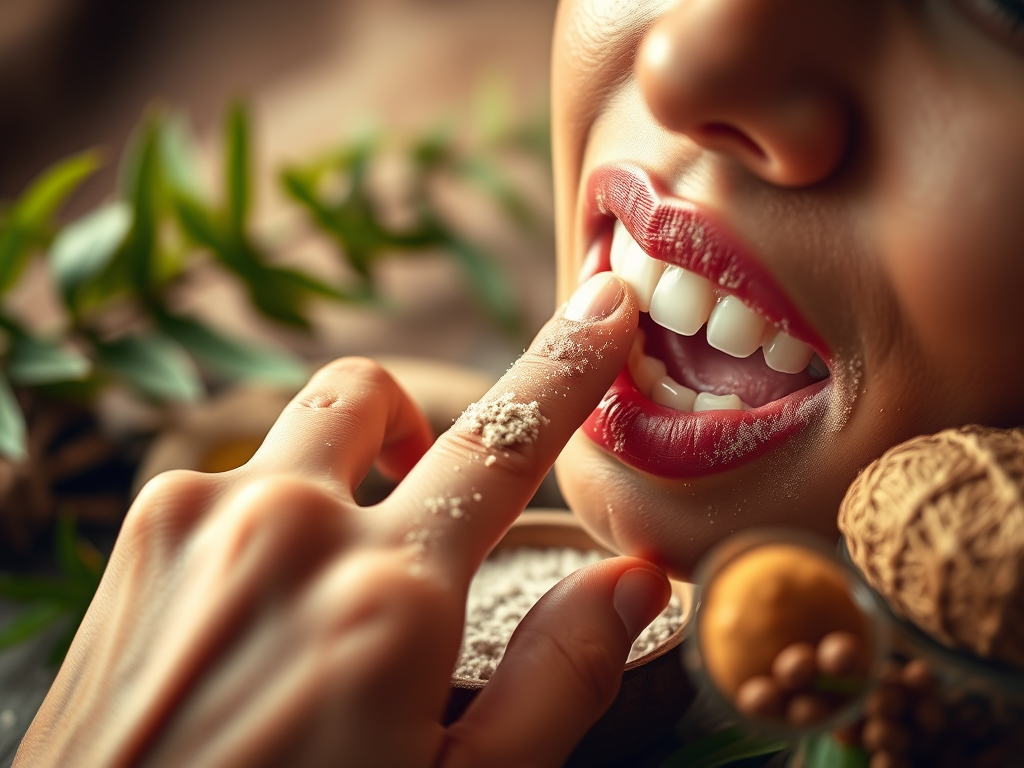
The Ayurvedic Approach to Dental Care: The Power of Finger Cleaning
The Ayurvedic approach to dental hygiene emphasizes finger cleaning as an effective alternative to conventional methods. This technique, suitable for enhancing gum health and ensuring gentleness, involves using the middle finger and herbal powders. Finger cleaning is practical, accessible, and deeply rooted in holistic wellness principles, making it a viable option for oral care.
-

The Ayurvedic Secret to Natural Dental Care: The Magic of the Dental Stick
The Ayurvedic practice of using dental sticks, or “Dantun,” provides a natural alternative for oral hygiene, utilizing twigs from neem, miswak, or babool trees. These sticks possess antibacterial properties, are eco-friendly, and enhance gum health. Rediscovering this tradition promotes a healthier lifestyle and reduces plastic waste in dental care.
 Ritucharya