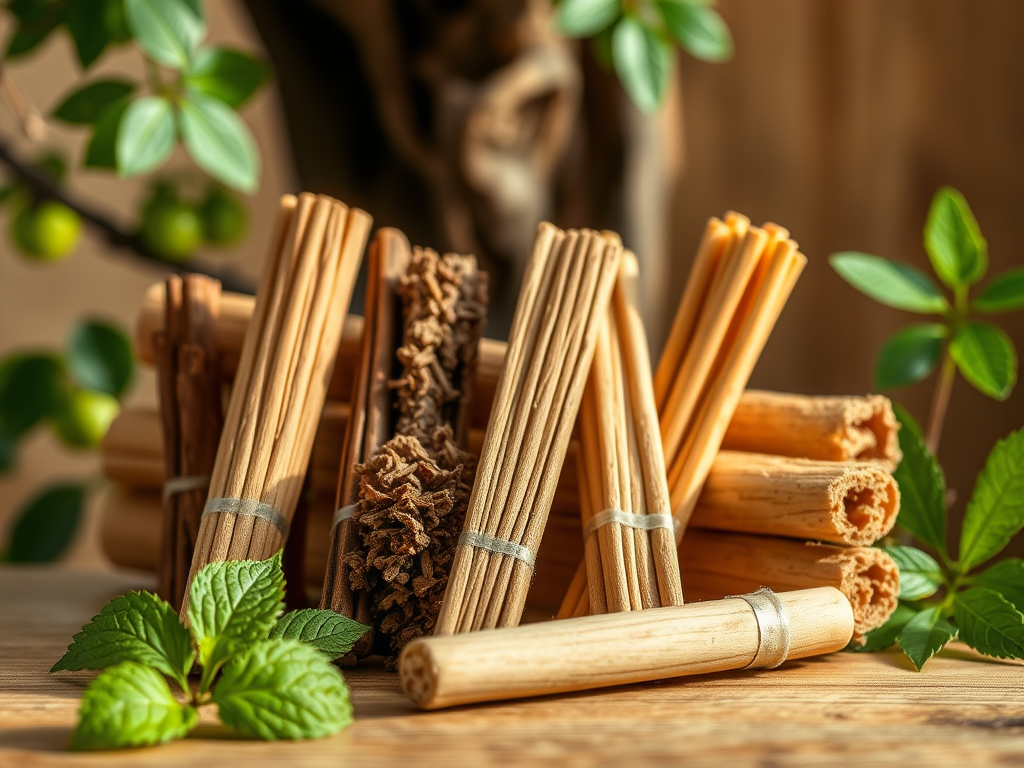
Ayurvedic Daily Routine: Dinacharya Certification Course, Section 6, Lecture 46
Introduction
Oral hygiene is a crucial part of maintaining overall health. While modern dental care involves toothbrushes and toothpaste, Ayurveda has long advocated for a natural alternative—dental sticks or “datun.” But not all trees are suitable for this purpose. In fact, choosing the wrong kind of dental stick can do more harm than good. In this guide, we explore which trees to avoid and why, according to Ayurvedic principles.
The Ayurvedic Perspective on Dental Sticks
Ayurveda suggests that an ideal dental stick should possess a combination of three tastes: pungent, bitter, and astringent. These flavors help balance Kapha dosha, which governs the oral cavity, while maintaining overall oral health.
However, dental sticks that exhibit sweet, sour, or salty flavors should be avoided. According to Ayurveda, such sticks can disrupt the delicate balance of doshas in the body, leading to potential oral and digestive health issues.
Trees to Avoid for Dental Sticks
Here are some key characteristics of trees that should not be used for making dental sticks:
1. Sweet-Tasting Trees
- Trees that have a naturally sweet taste may increase Kapha dosha, leading to excessive mucus production and potential gum infections.
- Example: Mango tree (Mangifera indica)
2. Sour-Tasting Trees
- Sourness can irritate the gums, weaken tooth enamel, and increase sensitivity.
- Example: Tamarind tree (Tamarindus indica)
3. Salty-Tasting Trees
- Saltiness can disturb the pH balance in the mouth and lead to increased tooth decay.
- Example: Some varieties of coastal mangrove trees
4. Extremely Dry or Hollow Sticks
- Dry sticks may not effectively clean the teeth and might break easily while chewing.
- Example: Bamboo sticks
5. Sticks with Bad Odor or Sticky Sap
- Trees that have a foul smell or release sticky substances can harbor harmful bacteria.
- Example: Certain fig tree varieties
Ideal Characteristics of a Dental Stick
For a dental stick to be effective, it should have the following properties:
- Pungent, bitter, or astringent taste to balance oral Kapha dosha.
- Fresh and flexible—not too hard or brittle.
- No foul smell or sticky sap.
- Slightly fibrous texture to aid in plaque removal.
Recommended Ayurvedic Dental Sticks
- Neem (Azadirachta indica): Antibacterial, strengthens gums, prevents cavities.
- Babool (Acacia nilotica): Astringent, prevents gum infections.
- Licorice (Glycyrrhiza glabra): Sweet but medicinal, soothes gums.
- Arjuna (Terminalia arjuna): Strengthens teeth and promotes oral health.
- Karanja (Pongamia pinnata): Antiseptic and useful for bad breath.
How to Use a Dental Stick Properly
- Choose a fresh stick about the length of your hand and as thick as your little finger.
- Chew one end until it softens and forms bristles.
- Use it to brush your teeth gently, avoiding excessive pressure on gums.
- Spit out the residue and rinse your mouth thoroughly.
- Dispose of the stick naturally, as it is biodegradable.
Conclusion
Ayurveda provides a natural and holistic approach to oral hygiene. While dental sticks offer numerous benefits, choosing the right type is crucial. Avoid sweet, sour, and salty-tasting sticks, as well as those that are dry, hollow, or odorous. Instead, opt for traditional Ayurvedic sticks like neem, babool, and arjuna to promote excellent oral health.
Switching to a natural dental stick could be the change your oral care routine needs! Have you tried an Ayurvedic dental stick before? Share your experience in the comments below!
 Ritucharya
Leave a comment