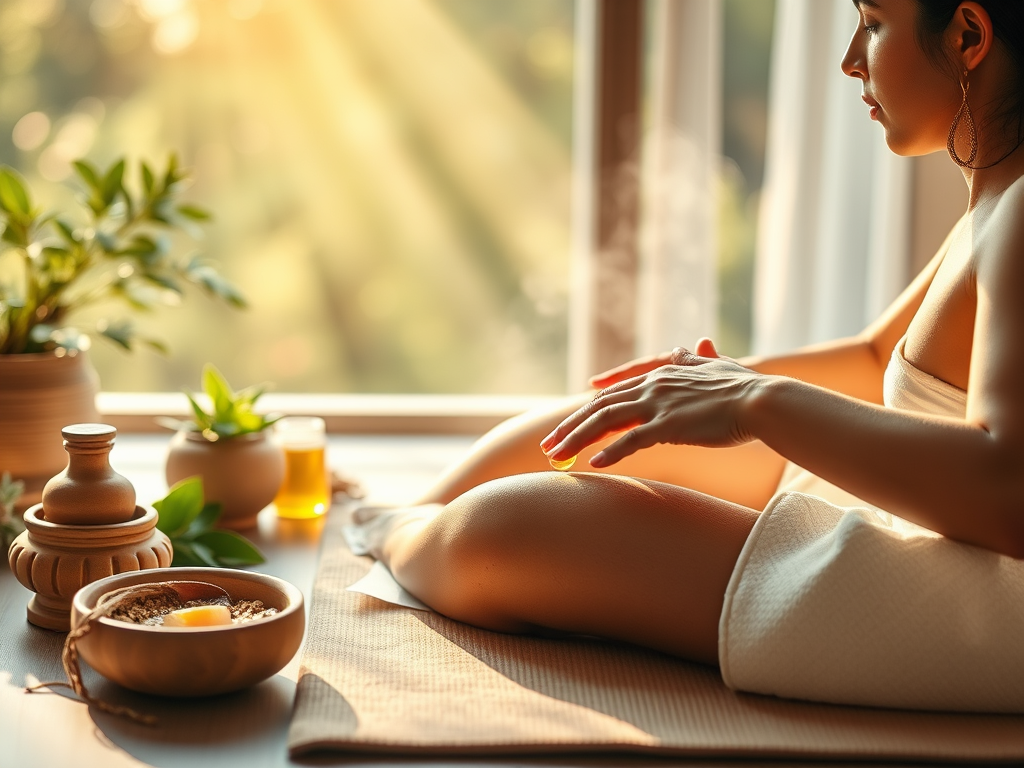
Ayurvedic Daily Routine: Dinacharya Certification Course, Section 8, Lecture 64
Introduction
Abhyanga, the Ayurvedic self-massage practice, is a powerful tool to enhance circulation, detoxify the body, and promote overall well-being. But did you know that timing plays a crucial role in maximizing its benefits? In this guide, we will explore the best times to practice Abhyanga, why you should avoid it after meals, and how you can incorporate this ritual into your daily routine.
When Should You Practice Abhyanga?
1. Ideal Time: Early Morning (Before Bathing)
According to Ayurveda, the best time to practice Abhyanga is in the morning before taking a bath. Here’s why:
- Elimination First: Before starting the massage, make sure you have emptied your bowels and bladder. Ayurveda emphasizes not suppressing natural urges, as elimination helps the body feel lighter and more receptive to the massage.
- Kapha Dosha Time: The early morning hours (before 10 AM) are dominated by Kapha energy. Since Kapha tends to be heavy and slow, a warm oil massage can stimulate circulation and metabolism.
- Detoxification: Oil massage helps draw out toxins from the skin and deeper tissues. Once absorbed for a few minutes, a warm bath helps wash away these toxins, leaving you refreshed.
2. Evening as an Alternative Time
If you’re not a morning person or cannot practice Abhyanga in the morning, the evening is another excellent time.
- Vata Dosha Time: The evening hours are dominated by Vata energy, which controls movement, circulation, and nervous system activity. Since the skin is the seat of Vata, an evening massage helps calm the nervous system, reduce stress, and promote restful sleep.
- Pain Relief: If you suffer from body pain, headaches, or joint discomfort, an evening massage followed by a warm bath can provide significant relief.
- Rejuvenation: A quick 5–10-minute massage in the evening helps release tension built up throughout the day, leaving you feeling refreshed and relaxed.
When NOT to Practice Abhyanga
1. After a Meal
One of the biggest mistakes people make is performing an oil massage immediately after eating. Here’s why it should be avoided:
- Digestion Needs Energy: After a meal, blood flow is concentrated in the digestive system to absorb nutrients. A massage redirects circulation to the limbs, disrupting digestion and potentially leading to indigestion or sluggish metabolism.
- Kapha Phase of Digestion: Right after eating, the body enters the Kapha phase of digestion, which induces a feeling of heaviness and drowsiness. This is not an ideal state for self-massage.
- Better Timing: If you wish to do an oil massage later in the day, wait at least 1–2 hours after a meal when digestion has progressed beyond its initial phase.
How to Incorporate Abhyanga into Your Routine
Morning Routine:
- Wake up and eliminate waste naturally.
- Warm up your preferred oil (sesame for Vata, coconut for Pitta, mustard or castor for Kapha).
- Apply the oil in circular motions on joints and long strokes on limbs.
- Let the oil absorb for 10–25 minutes.
- Take a warm bath or shower to wash away toxins.
- Continue with your day feeling rejuvenated!
Evening Routine:
- Perform a short 5–10-minute oil massage after your workday.
- Use gentle, calming strokes to relax the nervous system.
- Let the oil sit for a few minutes.
- Take a warm shower to promote relaxation.
- Enjoy a deep, restful sleep!
Conclusion
Whether you choose morning or evening, practicing Abhyanga regularly can bring immense physical and mental benefits. By understanding the best times to perform this self-care ritual, you can enhance your health, boost circulation, and balance your doshas effortlessly. Start today and embrace the ancient wisdom of Ayurveda for a healthier, more vibrant life!


 Ritucharya
Leave a comment